Home » News » Industry news » When Cutting-edge Technology Is Literally in Your Hands: Unveiling The Powerful Capabilities Behind The Viral "tungsten Cube"
When Cutting-edge Technology Is Literally in Your Hands: Unveiling The Powerful Capabilities Behind The Viral "tungsten Cube"
Views: 0 Author: Site Editor Publish Time: 2026-01-15 Origin: Site
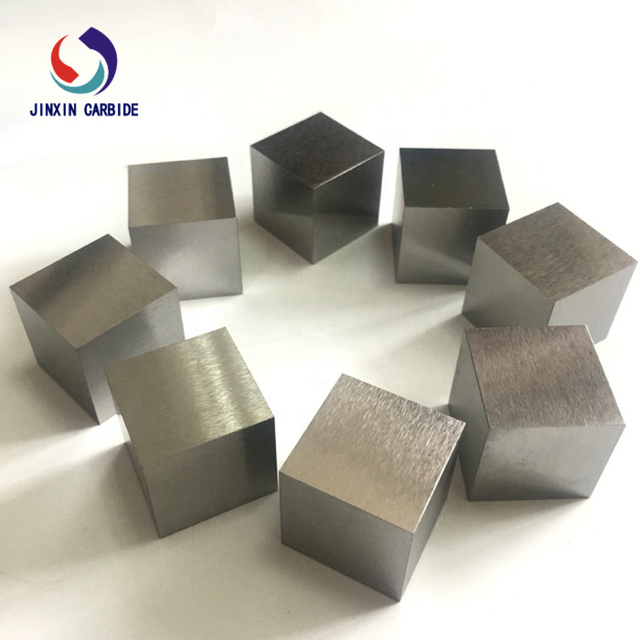
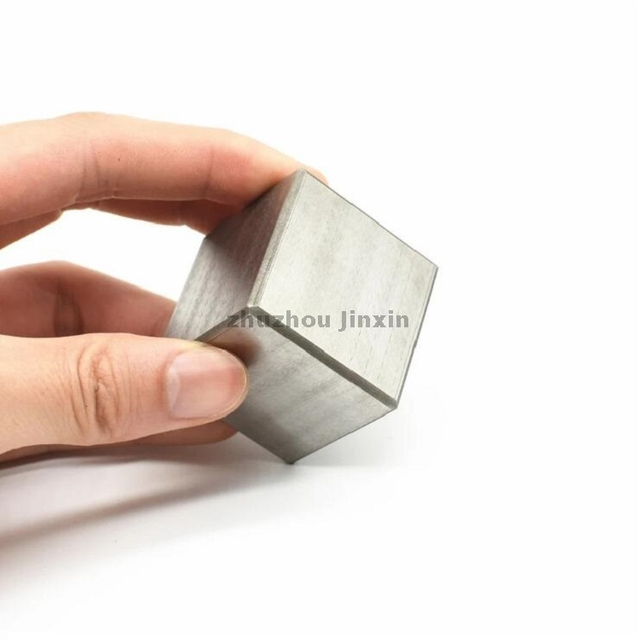
Recently, a heavy, metallic-looking tungsten cube has been "breaking out" of professional laboratories and factories, becoming a new favorite among tech enthusiasts and on social media. People are amazed by its incredible density and weight – "palm-sized, yet as heavy as a brick." However, this seemingly simple cube is worth far more than just a surprising paperweight or stress-relieving gadget; it embodies the core demands of modern industry and cutting-edge technology.
The "Stabilizer" and "Guardian" in Extreme Environments
Tungsten boasts the highest melting point (3422°C) among naturally occurring metals and an extremely high density (19.25 grams per cubic centimeter), making tungsten cubes irreplaceable in dealing with extreme conditions. In the aerospace field, it is used as a counterweight for critical aircraft components, achieving precise center of gravity adjustments with minimal volume, ensuring flight stability. In the fields of nuclear energy and high-energy physics, high-purity tungsten cubes are one of the important materials for manufacturing radiation shielding components, effectively absorbing and blocking harmful radiation, protecting personnel and precision equipment.
The "Benchmark" and "Cornerstone" of Precision Manufacturing
In the field of ultra-precision machining and measurement, tungsten cubes leverage their core advantages of dimensional stability and resistance to deformation. Its stable physical properties make it a benchmark material for calibration in equipment such as coordinate measuring machines and precision machine tools. Its presence is like a "rigid ruler," ensuring the reliability of micron and even nanometer-level machining accuracy, and is an indispensable "silent cornerstone" in high-end manufacturing equipment.
The "Key" and "Sample" for Frontier Exploration
For materials science and engineering research, high-purity, perfectly structured single-crystal or polycrystalline tungsten cubes themselves are extremely valuable research samples. Scientists use them to deeply explore the behavior of metals under ultra-high temperatures and pressures, and the relationship between their crystal structure and properties. These fundamental studies provide key data and theoretical support for the development of next-generation high-temperature resistant materials, inner wall materials for nuclear fusion reactors, and more.
In a sense, this "heavyweight" cube held in one's hand is not only a tangible lesson in material density but also a physical key to touching the "backbone" of industrial civilization. It allows the public to perceive the texture and weight of the cutting-edge materials that underpin space exploration, the energy revolution, and precision manufacturing. When people hold this small cube in their hands, they are also feeling the substantial foundation and future potential of modern technology.
Taking the construction group company as the development blueprint, Jingxin Group will focus on the development of cemented carbide, mining machinery, engineering tools, auto parts, new energy, and leisure sports equipment industries.

 +86-18073319589